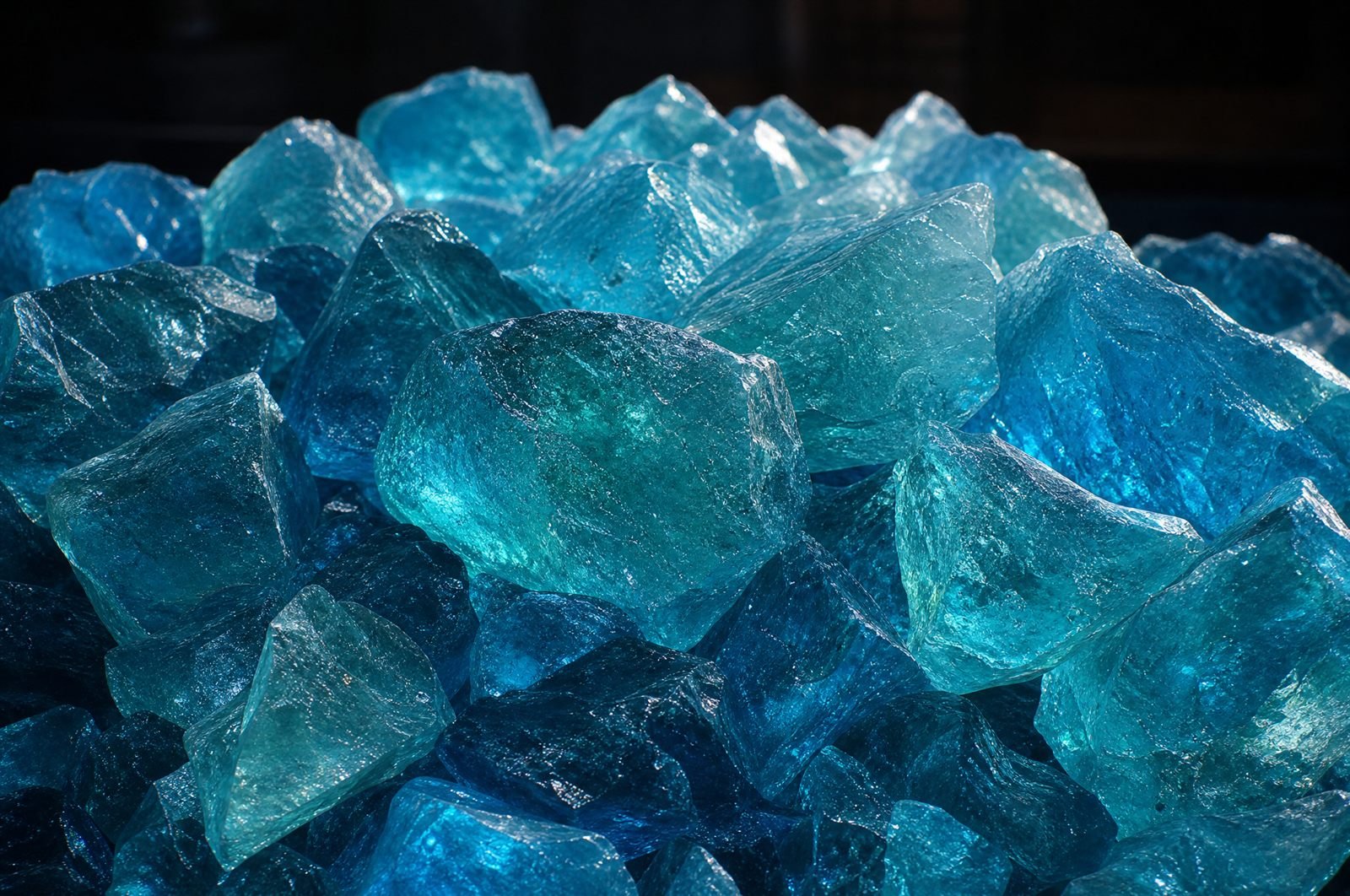
Sodium Silicate Lumps
Sodium silicate glass is the solid form of our silicate, drawn from the furnace before dissolving. Silica sand and soda ash are fused at roughly 1400°C and the melt is quenched into hard, glassy lumps or cullet.
Buyers take it when they prefer to dissolve on site: you control the concentration, and you ship glass instead of water, which cuts freight cost on long hauls and export consignments.
Technical specifications
Alkaline grade
Ratio 1:1.7–2.8- Wt. ratio Na₂O:SiO₂1:1.7 to 2.8
- Total soluble solids99.0% min
- Na₂O26.0–34.0%
- SiO₂65.0–73.0%
- Moisture1.0% max
- AppearanceClear to bluish-green glass
Neutral grade
Ratio 1:2.9–3.3- Wt. ratio Na₂O:SiO₂1:2.9 to 3.3
- Total soluble solids98.5% min
- Na₂O23.0–25.0%
- SiO₂73.0–76.0%
- Moisture1.0% max
- AppearanceClear to pale green glass
Figures are typical and non-binding. A certificate of analysis is issued with every consignment.
Packing options
- Loose in truck20 – 40 MT
- Jumbo bag1 MT
- HDPE bag50 kg
- Export packingTo order
Lump size is graded to suit your dissolver. Tell us the vessel and we will size the charge.
Applications
Selection notes
Alkaline grades (1.7–2.8) carry more soda, dissolve faster and give higher alkalinity in the finished liquor. Preferred where the silicate is doing cleaning or binding work.
Neutral grades (2.9–3.3) carry more silica, set harder and suit adhesives, silica gel and coating applications.
Freight economics glass is far more concentrated than liquor by weight. On long consignments lumps usually land cheaper even after your dissolving cost. Ask us to run the comparison for your lane.
Dissolving on site
Use pressure and heat
Silicate glass dissolves in a pressure dissolver with steam, typically at several bar. Atmospheric dissolving works but is far slower. Lump size matters: smaller cullet dissolves faster, larger lumps handle and store better.
Work out your own ratio
Because you control the water addition, you set the final Baumé. This is the main reason buyers take glass rather than liquor, alongside freight.
Undissolved fines
A small insoluble residue is normal and comes from furnace refractory. Filter or settle the liquor before use in anything where clarity matters, such as coatings.
Handling & storage
Keep it dry
The surface of silicate glass is hygroscopic. Prolonged damp storage produces a sticky skin and lumps that cake together. Store under cover on pallets, not on a wet floor.
Physically hard
It is glass. It cuts, and dropped lumps shatter. Gloves for handling, eye protection when breaking down large pieces.
Common questions
How do you dissolve sodium silicate lumps?
In a pressure dissolver with steam, typically at several bar. Atmospheric dissolving is possible but much slower. Smaller cullet dissolves faster than large lumps.
Why buy lumps instead of liquid sodium silicate?
Two reasons: you control the final concentration by setting your own water addition, and you avoid paying freight on water. On long hauls glass often lands cheaper even after your dissolving cost.
Is a residue after dissolving normal?
A small insoluble residue from furnace refractory is normal. Filter or settle the liquor before use where clarity matters, such as in coatings.